What Is Software-Defined Networking (SDN)?
Software-defined networking changes how a network is controlled, not why the network exists. Devices still forward traffic, while software gives engineers a more consistent way to apply policy, automate change, and understand the network as a whole.
Network Automation and Programmability Series
Move from controller-based networking to repeatable infrastructure automation, one practical concept at a time.
In This Lesson
Build a clear mental model of SDN before touching controllers or APIs. You will see how intent moves through control, management, and data planes to become forwarding behavior.
Quick Learning Map
Keep these three decisions in view as you work through the detailed lesson.
Express intent
Describe the policy or outcome the network should provide.
Controller computes
Central software translates intent using topology and device state.
Devices forward
Network devices apply the resulting rules and carry production traffic.
SDN at a Glance
In a traditional network, each device usually makes many of its own control decisions. SDN introduces a controller that provides a broader view of the environment and exposes useful network functions to applications and automation tools.
Software expresses intent
An application or operator describes the required policy, connectivity, or operational outcome.
The controller coordinates
The controller translates that request into actions and applies them consistently across the network.
Devices keep forwarding
Switches, routers, firewalls, and fabric nodes continue moving traffic in the data plane.
1. Why Traditional Networking Feels Slow During Change
Routers, switches, firewalls, and wireless platforms are good at their individual jobs. The difficulty appears when one business request touches several platforms and every change must happen in the correct order.
Imagine that your team is launching a new application. The servers may be ready in minutes, but the network could still need VLANs, routed gateways, firewall policy, NAT, monitoring, DNS, documentation, and validation. If each step is performed separately, a small difference in one device can delay the entire rollout.
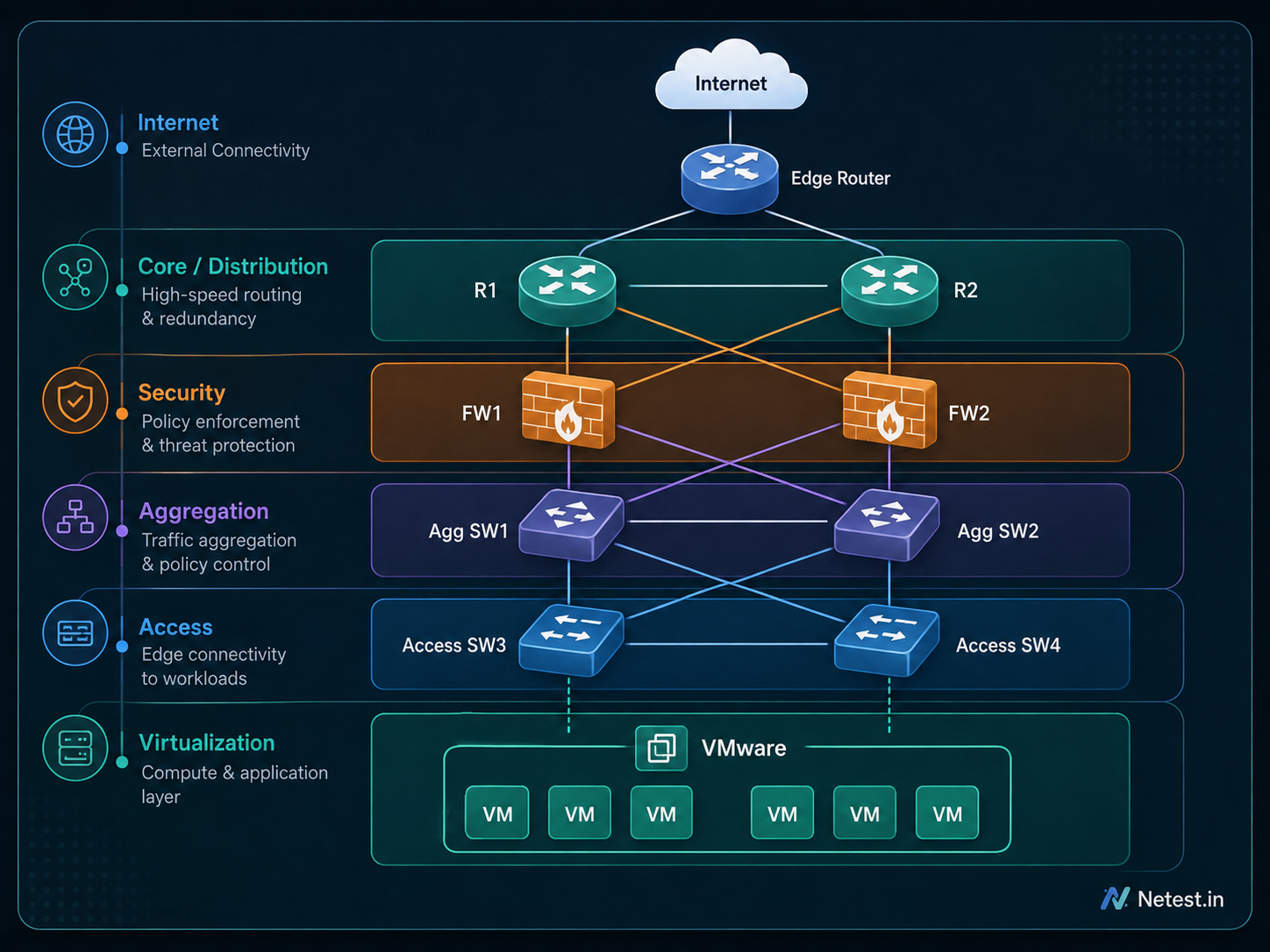
Many touch points
VLANs, SVIs, routing, firewall policy and documentation may all need updates.
Manual drift
Small CLI differences across devices can quietly become troubleshooting problems later.
Slow feedback
Engineers may discover mistakes only after the maintenance window begins.
2. Separate the Control, Data, and Management Planes
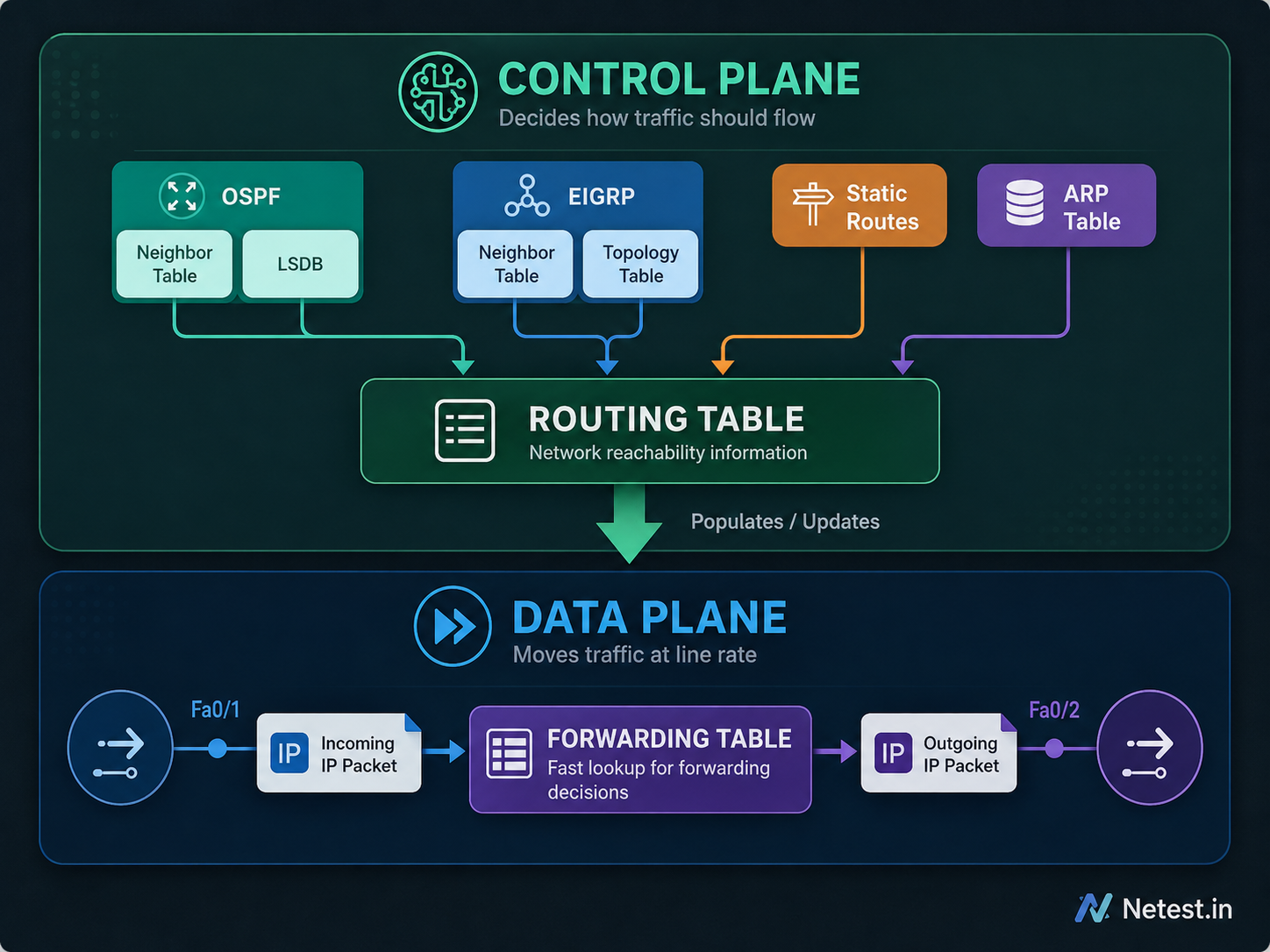
SDN becomes much easier to understand once these three responsibilities are separated. They are logical functions, even when one physical device performs all three.
| Plane | Main role | Common examples |
|---|---|---|
| Control plane | Learns reachability and decides how traffic should flow. | OSPF, EIGRP, BGP, STP, ARP, routing table, topology decisions. |
| Data plane | Moves packets using programmed forwarding information. | FIB lookup, MAC lookup, ACL action, NAT rewrite, QoS marking, packet forwarding. |
| Management plane | Lets humans and tools configure, monitor and maintain devices. | SSH, console, SNMP, NETCONF, RESTCONF, telemetry and GUI access. |
3. Understand What SDN Actually Changes
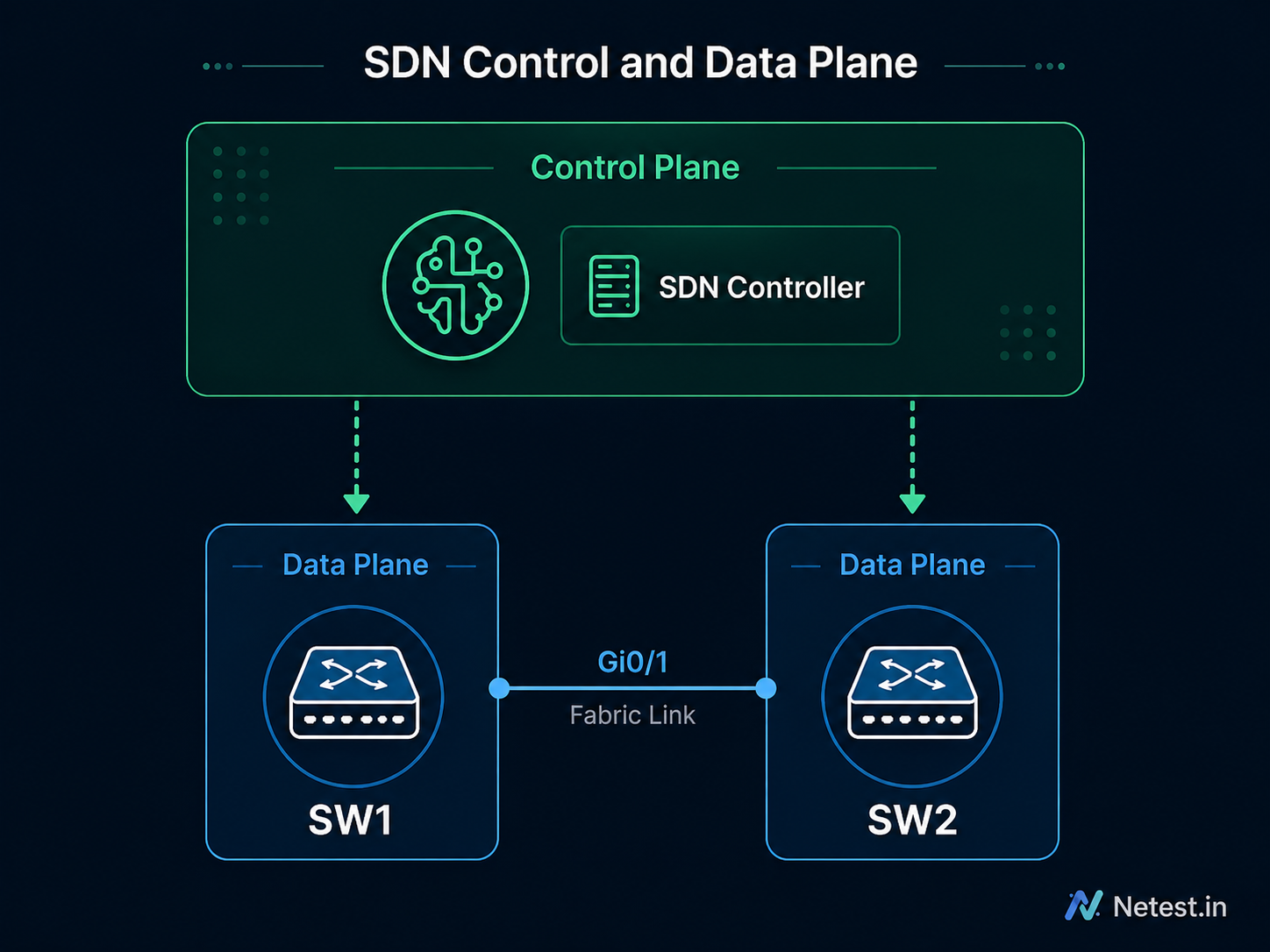
In traditional networking, each device usually runs its own control logic. Devices exchange protocol information with one another, but there may be no single controller that understands the whole network and can turn business intent into consistent configuration.
With SDN, a controller or controller cluster becomes the logical control point. Depending on the platform, it may program forwarding entries, push policy, discover topology, provide assurance, or coordinate changes while devices keep some local intelligence.
This distinction matters: logically centralized does not always mean one physical controller. Production platforms commonly use a controller cluster for scale and resilience while presenting one coordinated control system.
4. Understand Northbound and Southbound Interfaces
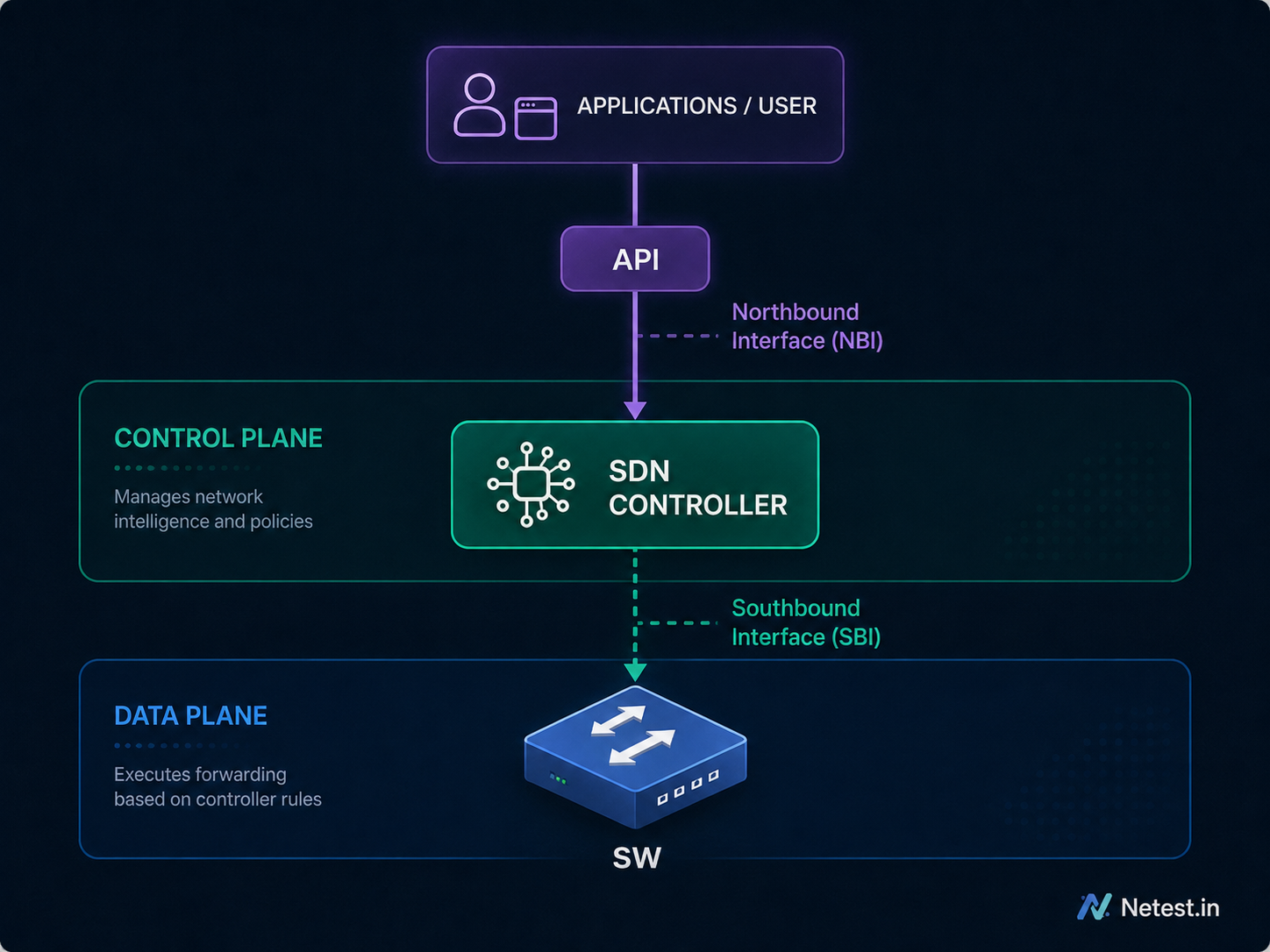
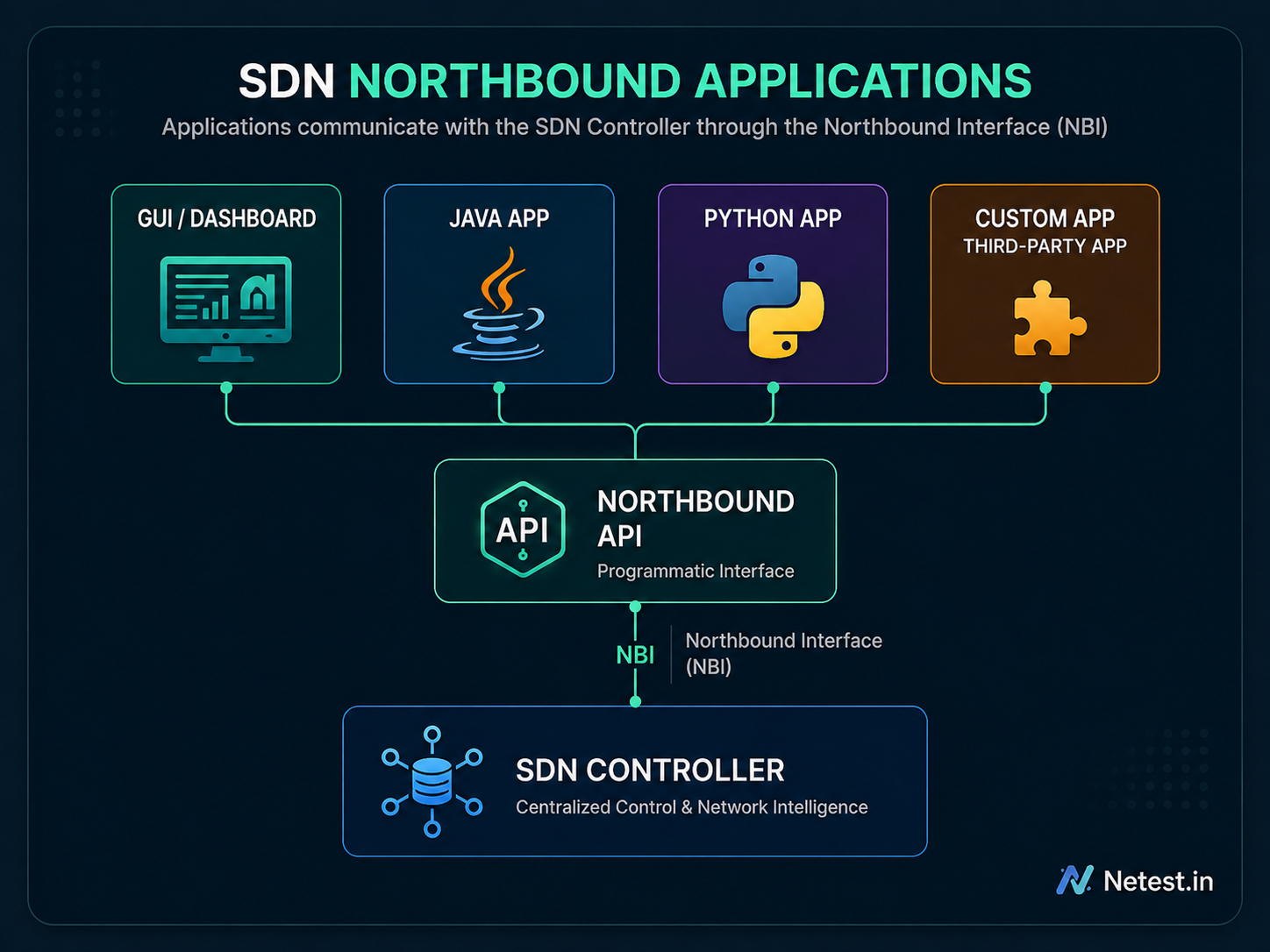
An SDN controller communicates in two directions. Applications talk to the controller through the northbound interface. The controller talks to network devices through the southbound interface.
Northbound interface
Used by dashboards, scripts, portals and automation systems to request data or submit intent.
Controller logic
Maintains topology, inventory, policy, assurance, intent or forwarding decisions.
Southbound interface
Used by the controller to program devices or collect operational state from them.
Southbound options vary by vendor and product. You may see OpenFlow, OpFlex, NETCONF, RESTCONF, gNMI, SNMP, SSH/CLI adapters, device agents, or proprietary mechanisms. The goal is the same: convert control logic into real device behavior.
5. Follow One SDN Change End to End
Suppose an application team requests a new isolated network segment. The exact implementation varies by platform, but the workflow usually follows the same pattern.
- The request enters through software. A portal, script, or orchestration system sends the required intent through a northbound interface.
- The controller checks context. It evaluates inventory, topology, policy, existing state, and the permissions attached to the request.
- The controller translates intent. It determines which device-level changes are required across the relevant switches, routers, firewalls, or fabric nodes.
- Southbound mechanisms apply the change. The controller uses the interfaces supported by the platform to program or configure the devices.
- Operational state confirms the result. Telemetry, device responses, and assurance checks show whether the intended outcome was achieved.
6. Know Where SDN Helps Network Engineers
SDN does not remove the need for networking fundamentals. A controller can push a bad design faster than a person can type it. The advantage is that good design, validation and rollback can become repeatable instead of heroic.
What becomes easier
- Centralized visibility across sites, devices, or fabrics.
- Repeatable policy and configuration changes.
- Automation tied to approval and validation workflows.
- Consistent segmentation and troubleshooting data.
What engineers still own
- Sound routing, switching, and security design.
- Clear intent, policy boundaries, and failure handling.
- Testing, staged deployment, and rollback planning.
- Troubleshooting when the controller and device state disagree.
Skills that become more valuable
- APIs, data models, and version control.
- Reading telemetry and assurance results.
- Translating business requirements into network policy.
- Using platforms such as Cisco DNA Center, Terraform, and Ansible.
8. Frequently Asked Questions
What is SDN in simple terms?
SDN separates network control logic from individual forwarding devices and exposes that logic through a controller, making the network easier to automate and operate centrally.
Does SDN replace network engineers?
No. It changes the operating model. Engineers still need design, routing, switching, security and troubleshooting knowledge.
Is SDN the same as network automation?
No. SDN is an architecture. Network automation is the practice of using software to perform repeatable network tasks. SDN often makes automation easier.
What is a northbound interface?
It is the interface used by applications, dashboards and scripts to communicate with an SDN controller.
What is a southbound interface?
It is the interface used by the controller to communicate with routers, switches, firewalls, wireless access points or fabric nodes.
Do SDN switches still forward packets?
Yes. SDN separates control from forwarding, but data-plane devices still move traffic at line rate based on programmed state or policy.