CCNA 200-301 v2.0 Certification FAQs for 2026
CCNA 200-301 v1.1 is the single exam for Cisco Certified Network Associate certification. This guide summarizes the exam format, current topic weights, updated areas, and the Cisco exam-topic PDF pages in a readable blog format.
In This Lesson
Understand the current CCNA 200-301 exam format, topic emphasis, and practical preparation choices. Use the official blueprint as the study boundary and turn it into a realistic plan.
Quick Learning Map
Keep this three-step view in mind as you work through the detailed lesson.
Read the blueprint
Identify the published domains, task verbs, and relative weighting.
Build a study plan
Combine concepts, configuration practice, verification, and troubleshooting.
Measure readiness
Use timed practice and weak-area review instead of memorizing isolated answers.
CCNA 200-301 v2.0 Certification FAQs for 2026 at a Glance
Use this summary before moving into the detailed explanations, examples, commands, and checks.
Core focus
Understand the current CCNA 200-301 exam format, topic emphasis, and practical preparation choices.
Key connection
Read the blueprint → Build a study plan → Measure readiness
Practical outcome
Use the official blueprint as the study boundary and turn it into a realistic plan.
What should you know about the CCNA 200-301 exam?
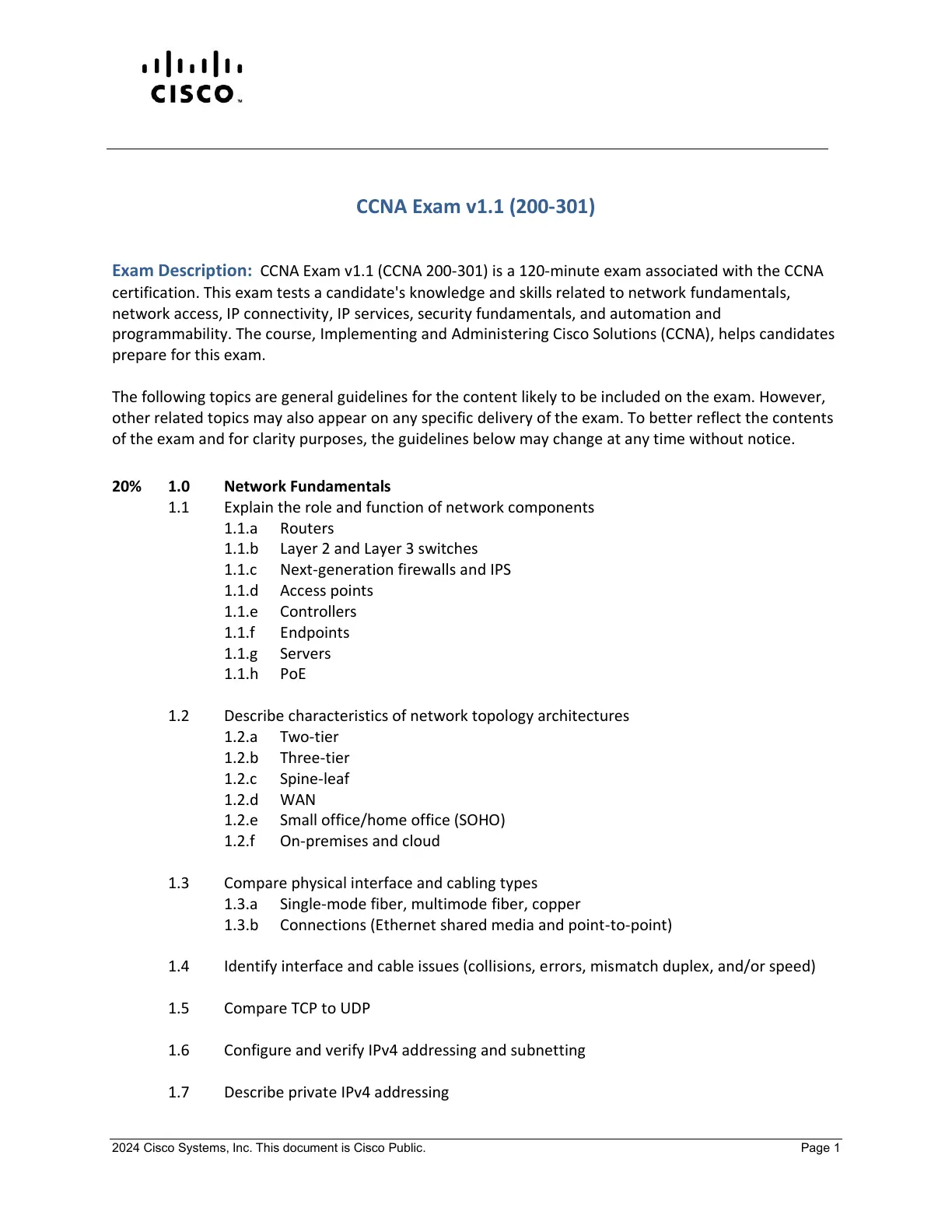
CCNA 200-301 v2.0 tests networking fundamentals, network access, IP connectivity, IP services, security fundamentals, and automation and programmability. Candidates should confirm the current price, scheduling rules and topic blueprint with Cisco before booking because exam policies can change.
Quick Exam FAQs
Note: Cisco exam policies, pricing, and scoring can change by region and testing provider. Always confirm final registration details with Cisco or Pearson VUE before booking.
CCNA 200-301 Exam Format
| Field | Current Detail |
|---|---|
| Cisco Exam Number | CCNA 200-301 v1.1 |
| Number of Questions | 80-100 |
| Duration | 120 minutes |
| Pass Score | 750/1000 (75%) is commonly referenced by training providers, but Cisco may scale scores by exam form. |
| Cost | 300 USD, subject to tax, currency, and regional testing-provider changes. |
| Question Types | Multiple choice, drag and drop, and performance-based lab-style tasks. |
New and Updated CCNA Topics
Cisco has added or emphasized topics that reflect modern network operations: AI concepts, automation, virtualization, cloud-managed infrastructure, APIs, and open standards. In the exam syllabus, keywords such as describe, explain, compare, configure, and verify tell you the expected depth.
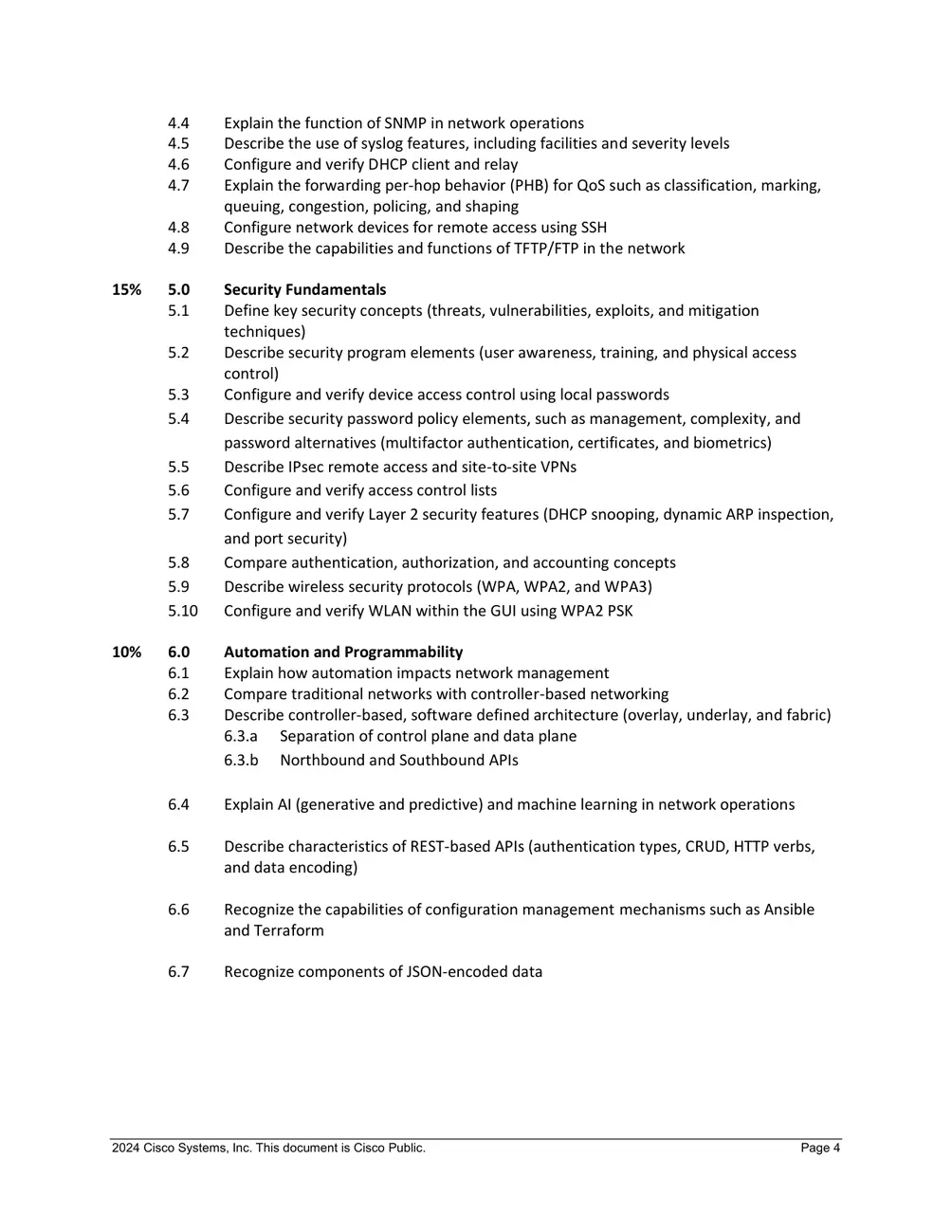
- Generative AI and predictive AI
- Machine learning
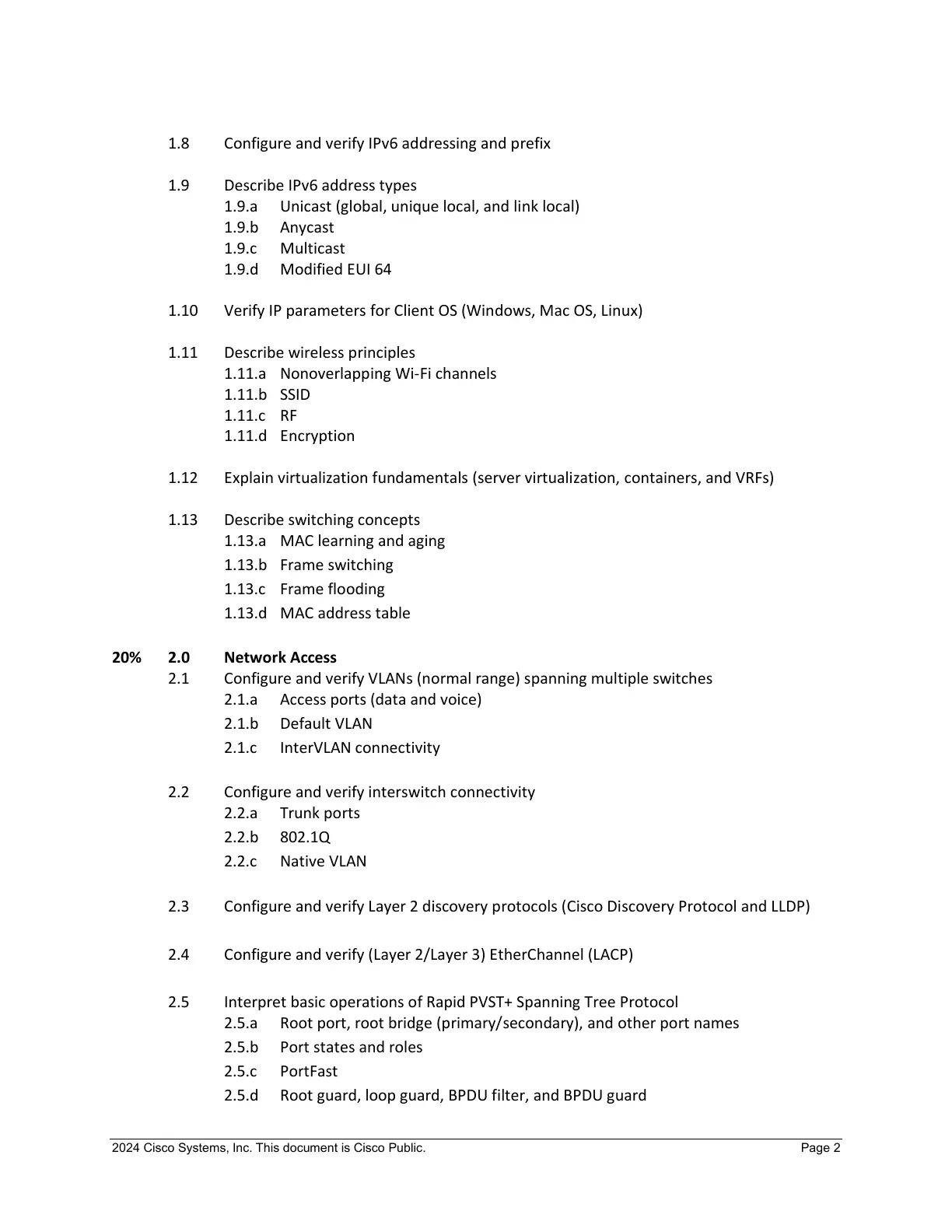
- STP Root Guard, Loop Guard, and BPDU Filter
- InterVLAN connectivity
- Server virtualization, containers, and VRFs
- Terraform
- API authentication methods
- Cloud device management
Terraform appears in the current automation direction where older configuration-management examples such as Chef and Puppet are no longer the focus for this level.
How Cisco Has Shifted the CCNA
The CCNA has moved toward foundational networking plus modern operations. OSPF is the primary routing protocol in the blueprint, while automation, SDN, controller-based networking, APIs, and Infrastructure as Code are now part of the expected vocabulary.
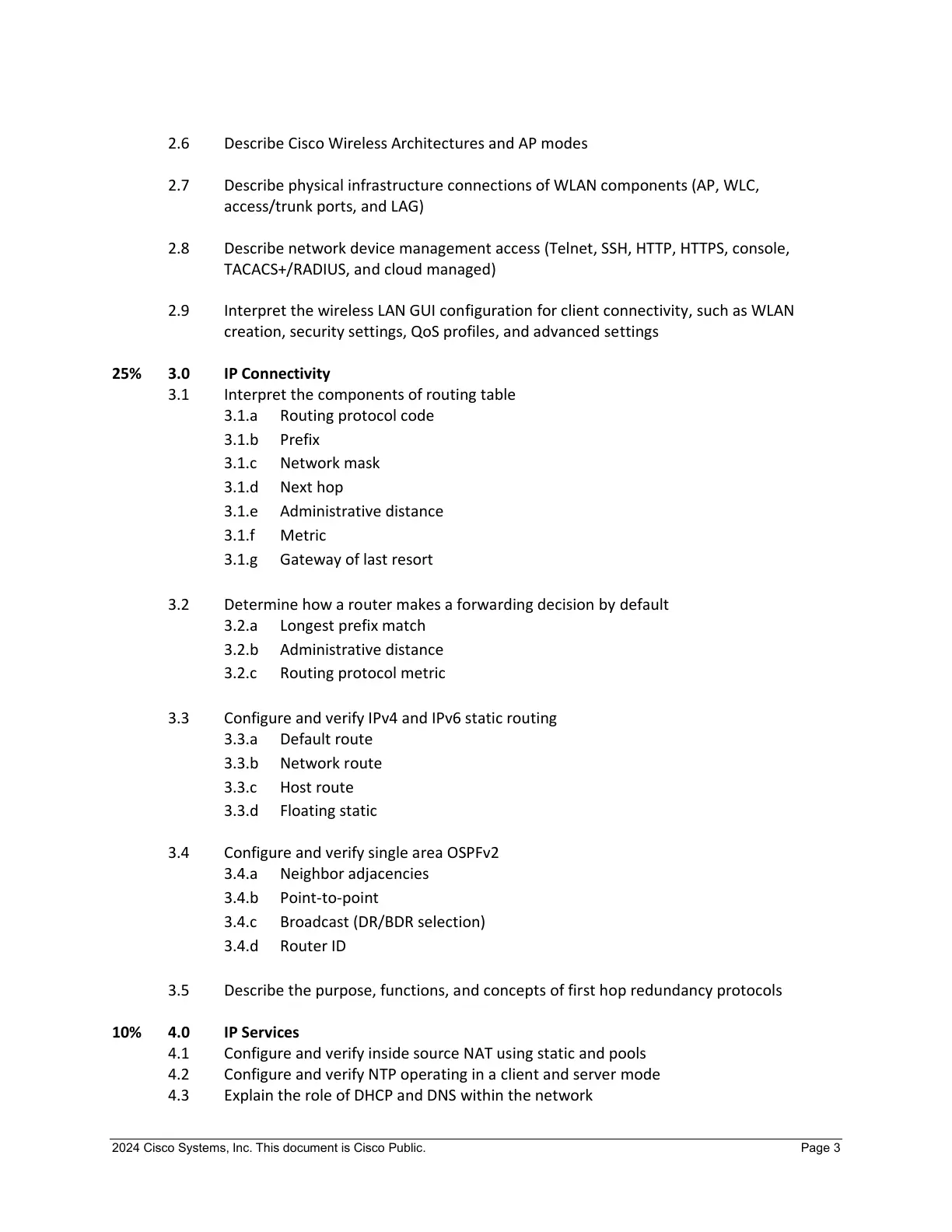
You should still know the administrative distance of EIGRP, RIP, BGP, and IS-IS. You may also see route-selection concepts such as EIGRP metrics because routing decisions are still a foundational skill.
CCNA Topic Scoring
| Knowledge Domain | Scoring Weight |
|---|---|
| Network Fundamentals | 20% |
| Network Access | 20% |
| IP Connectivity | 25% |
| IP Services | 10% |
| Security Fundamentals | 15% |
| Automation and Programmability | 10% |
Study priority: IP Connectivity has the largest weight, but do not ignore Network Access and Network Fundamentals. Together, those three areas cover 65% of the exam blueprint.
How to Turn the Exam Outline into a Study Plan
A topic list becomes useful when it is converted into tasks you can demonstrate. For routing, build a small lab and explain why a route was selected. For switching, verify VLAN membership, trunk behavior and spanning-tree state. For security, describe the purpose and limitation of each control rather than memorizing isolated product names.
Use practice questions to expose gaps, not to replace hands-on learning. When an answer is wrong, write down the mistaken assumption and the command or diagram that would have proved the correct answer. This creates a personal review list that is much more valuable than repeatedly taking the same quiz.
In the final weeks, balance recall with timing. Practice reading a topology, identifying the question being asked and eliminating answers that violate the protocol behavior. The exam rewards clear fundamentals, so a calm explanation of a smaller number of concepts is better preparation than shallow familiarity with every keyword.
Common CCNA Confusion to Clear Up
Is CCNA only routing and switching?
No. Routing and switching are still important, but CCNA now includes security fundamentals, wireless, automation, programmability, controller-based networking, and cloud-managed concepts.
Is OSPF the only routing protocol I need?
OSPF is the primary routing protocol at CCNA level, but you should recognize other protocols and know administrative distance, route source preference, and metric basics.
Are performance-based labs part of the exam?
Yes. Expect hands-on style tasks that test whether you can interpret, configure, or verify core networking behavior.
CCNA 200-301 Exam Topics PDF Pages
The pages below are rendered from the PDF at /img/pdfs/200-301-CCNA-v1.1.pdf. They are shown as individual static images, one page at a time, so the article does not rely on a PDF reader or embedded viewer.