Cryptography and IPsec Fundamentals for DMVPN
Build the security model behind a protected DMVPN. Translate plaintext into cryptographic controls, compare hashes and encryption, choose a safe Diffie-Hellman group, apply an IKEv2/IPsec profile, and prove the negotiated result.
Cryptography and IPsec at-a-Glance
Cryptography is a toolbox, not a single algorithm. DMVPN uses different tools for different jobs: IKEv2 authenticates peers and derives keys, while IPsec ESP protects GRE packets in the data plane.
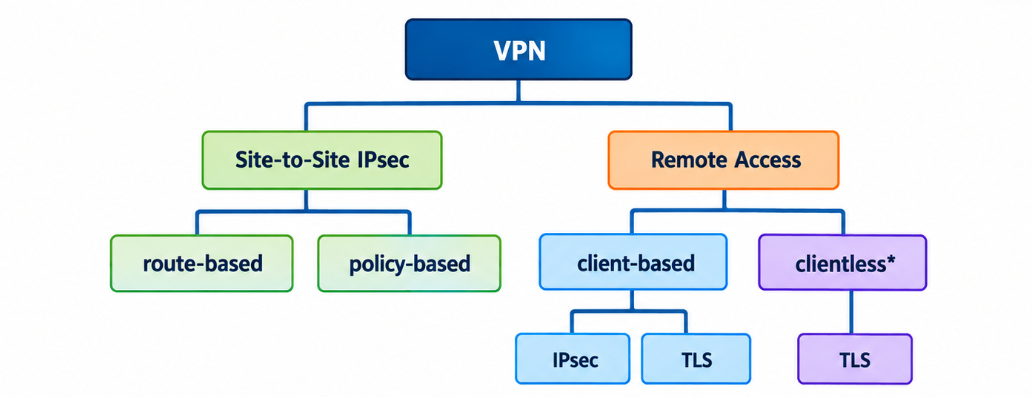
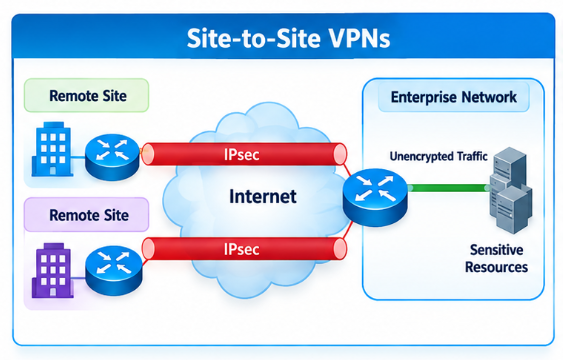
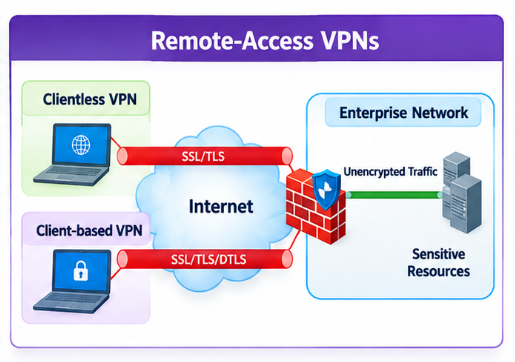
In This Lesson
1. Map the Core Cryptography Terminology
Start with the data and the security goal. A good design selects a control only after deciding whether the traffic needs confidentiality, integrity, peer authentication, or all three.
| Term | Meaning | DMVPN example |
|---|---|---|
| Plaintext | Readable original data before encryption. | The GRE packet entering IPsec protection. |
| Ciphertext | Encrypted output that should be unreadable without the correct key. | The encrypted ESP payload crossing the underlay. |
| Encryption | A reversible transformation from plaintext to ciphertext using an algorithm and key. | ESP using AES. |
| Decryption | Recovery of plaintext from ciphertext using the matching key. | The receiving peer processing ESP. |
| Hash | A fixed-length, one-way digest used to detect change. | SHA-256 in a lab comparison. |
| HMAC | A keyed message authentication code built from a hash function. | Integrity and origin assurance when both peers know the secret. |
A plain hash can detect a changed message only when the expected digest is trusted. HMAC adds a shared secret. Encryption provides confidentiality. Digital signatures provide origin authentication and integrity but do not normally encrypt the bulk data.
2. Test Hashing and HMAC
Create a small message, record its MD5 and SHA-256 digests, change one word, and calculate the values again. Both outputs change dramatically, but digest length stays fixed. MD5 is included only to demonstrate a legacy algorithm; collision attacks make it unsuitable for security decisions.
PowerShell
Set-Content -NoNewline message.txt 'DMVPN packet one'
Get-FileHash .\message.txt -Algorithm MD5
Get-FileHash .\message.txt -Algorithm SHA256

Set-Content -NoNewline message.txt 'DMVPN packet two'
Get-FileHash .\message.txt -Algorithm MD5
Get-FileHash .\message.txt -Algorithm SHA256
Linux or macOS
printf '%s' 'DMVPN packet one' > message.txt
md5sum message.txt
sha256sum message.txt

printf '%s' 'DMVPN packet two' > message.txt
md5sum message.txt
sha256sum message.txt
Prove why HMAC is different
Run the same message with two keys. A peer needs both the original message and the shared secret to reproduce the HMAC.
OpenSSL HMAC-SHA-256
printf '%s' 'DMVPN payload' | openssl dgst -sha256 -hmac 'LAB-KEY-ONLY'
printf '%s' 'DMVPN payload' | openssl dgst -sha256 -hmac 'WRONG-KEY'
printf '%s' 'Changed payload' | openssl dgst -sha256 -hmac 'LAB-KEY-ONLY'3. Compare Symmetric and Asymmetric Techniques
| Model | Keys | Strength in a VPN | Examples |
|---|---|---|---|
| Symmetric | The same secret key protects and recovers data. | Fast enough for bulk packet encryption. | AES-128, AES-192, AES-256 |
| Asymmetric | A mathematically related public/private key pair. | Authentication, signatures, and secure establishment workflows. | RSA, ECDSA, ECC |
| Key agreement | Each peer contributes private material and derives the same shared secret. | Creates session key material without sending the final secret across the wire. | Finite-field DH, ECDH |
DES
A 56-bit legacy cipher. Do not use it.
3DES
Applies DES operations repeatedly. It is slow, has a small block size, and is not recommended for new designs.
AES
The normal bulk-encryption family for modern IPsec, with 128-, 192-, and 256-bit keys.
AES-GCM
An authenticated-encryption mode that supplies confidentiality and integrity together when supported.
4. Choose a Diffie-Hellman Group
Diffie-Hellman is a key-agreement method. The peers exchange public values and independently derive shared key material; they do not transmit the final session secret. The group defines the mathematical parameters and security level.
| Group | Type | Lab guidance |
|---|---|---|
| 1 | 768-bit MODP | Avoid; obsolete strength. |
| 2 | 1024-bit MODP | Avoid for new designs. |
| 5 | 1536-bit MODP | Avoid for new designs. |
| 14 | 2048-bit MODP | Portable baseline and common interoperability choice. |
| 15 / 16 | 3072- / 4096-bit MODP | Stronger finite-field options with more processing cost. |
| 19 | 256-bit ECDH | Modern efficient choice when both peers support it. |
| 20 / 21 | 384- / 521-bit ECDH | Higher-strength elliptic-curve choices when policy and platform support align. |
| 24 | 2048-bit MODP with 256-bit subgroup | Do not assume a higher group number means stronger or preferred; verify current policy and interoperability. |
5. Map IPsec Features and Protocols
Confidentiality
ESP encrypts the protected GRE payload with a symmetric cipher such as AES.
Integrity
HMAC or an authenticated-encryption mode detects unauthorized changes.
Authentication
IKEv2 validates peer identity with a pre-shared key or certificates.
Anti-replay
ESP sequence numbers and a receive window reject replayed packets.
| Component | Role | DMVPN relevance |
|---|---|---|
| IKEv2 | Negotiates algorithms, authenticates peers, and derives keys. | Control plane that creates IKE and child SAs. |
| ESP | Encrypts and can authenticate the protected traffic. | Normal data-plane protection for GRE. |
| AH | Provides integrity/authentication but no encryption. | Rare in modern DMVPN; ESP is normally used. |
| Transport mode | Protects the payload of the outer IP packet. | GRE already supplies the tunnel, so this avoids another tunnel header. |
Routing protocols can send multicast inside the GRE overlay. Across the underlay, DMVPN maps that traffic to unicast NBMA peers, and ESP protects the resulting GRE packets.
6. Configure IKEv2 and an IPsec Profile
Apply this lab-only baseline to both peers after the GRE tunnel works without encryption. Command availability varies by IOS/IOS XE release, so use context-sensitive help and record the exact image in your evidence.
IKEv2 proposal and policy
crypto ikev2 proposal DMVPN-PROPOSAL
 encryption aes-cbc-256
 integrity sha256
 group 14
!
crypto ikev2 policy DMVPN-POLICY
 proposal DMVPN-PROPOSAL
Keyring and profile
crypto ikev2 keyring DMVPN-KEYRING
 peer DMVPN-PEER
  address 0.0.0.0 0.0.0.0
  pre-shared-key local DMVPN-LAB-ONLY
  pre-shared-key remote DMVPN-LAB-ONLY
!
crypto ikev2 profile DMVPN-IKEV2
 match identity remote address 0.0.0.0 0.0.0.0
 authentication local pre-share
 authentication remote pre-share
 keyring local DMVPN-KEYRING
IPsec transform and tunnel protection
crypto ipsec transform-set DMVPN-TS esp-aes 256 esp-sha256-hmac
 mode transport
!
crypto ipsec profile DMVPN-PROFILE
 set transform-set DMVPN-TS
 set ikev2-profile DMVPN-IKEV2
!
interface Tunnel0
tunnel protection ipsec profile DMVPN-PROFILE7. Verify, Break, and Recover the Negotiation
Generate interesting traffic through the tunnel, then verify IKEv2 and IPsec separately. The tunnel can be reachable while crypto negotiation is failing, and an IKE SA alone does not prove that ESP is carrying data.
Healthy-state evidence
show crypto ikev2 sa detail
show crypto ipsec sa
show crypto ipsec profile
show crypto session detail
show dmvpn
ping <remote-lan-ip> source <local-lan-ip>
What to prove
IKEv2 SA: established / ready
Child IPsec SA: active in both directions
Local and remote proxy/endpoint values: expected
ESP encaps and decaps counters: increasing
Decrypt or integrity failures: zero
Remote LAN ping: successful
Introduce one controlled proposal mismatch
On one peer only, replace group 14 with group 19 while the other peer offers only group 14. Clear the lab SAs during a maintenance-safe exercise, generate traffic, and record the no-common-proposal evidence. Restore group 14, clear the failed negotiation state, and prove that the SAs and counters recover.
Fault and rollback
crypto ikev2 proposal DMVPN-PROPOSAL
 no group 14
 group 19
! Capture the failed negotiation, then restore:
 no group 19
 group 14
!
clear crypto ikev2 sa
clear crypto sa
ping <remote-lan-ip> source <local-lan-ip>| Symptom | Likely layer | First evidence |
|---|---|---|
| No IKEv2 SA | Underlay, identity, authentication, or proposal mismatch | show crypto ikev2 sa detail |
| IKEv2 SA exists, no child SA | IPsec transform/profile or traffic selector mismatch | show crypto session detail |
| Encaps rises, decaps stays zero | Return path, remote policy, NAT, or filtering | Peer counters and underlay ACLs |
| Decrypt/integrity errors rise | Key, transform, packet corruption, or stale SA issue | show crypto ipsec sa |
8. Standards and Platform References
Algorithm guidance changes as attacks and implementations evolve. Confirm the current requirements for the deployed platform and organization before treating a lab baseline as a production standard.
9. Frequently Asked Questions
Does a hash encrypt data?
No. A hash produces a one-way fixed-length digest. Encryption is reversible with the correct key and supplies confidentiality.
Why does DMVPN normally use IPsec transport mode?
GRE already provides the tunnel that carries the original packet. IPsec transport mode protects the GRE packet without adding another complete tunnel-mode IP header.
Is a higher Diffie-Hellman group number always stronger?
No. The number is an identifier, not a strength score. Compare the group type, parameter size, current standards guidance, platform support, and organizational policy.
Why keep MD5 and SHA-1 in the comparison?
They help learners recognize legacy configurations and understand digest lengths, but they should not be selected for new VPN designs.